
After Fable 5: The Enterprise AI Resilience Architecture Every Organisation Must Build Before the Next Government Directive
The Fable 5 shutdown on June 12 produced a specific class of enterprise response over the weekend — urgent, reactive and focused almost entirely on the wrong question. The wrong question is: "Should we move our AI infrastructure on-premise to avoid government interference?" The right question is: "Have we built the AI architecture that allows our enterprise to operate without interruption when any single model or provider becomes unavailable — whether due to government action, technical failure, commercial decision or deprecation?" The Fable 5 event is not primarily a story about Anthropic or the US government. It is a story about the architectural gap that exists between how most enterprises have deployed frontier AI and how those deployments need to be structured to be resilient to the risk that June 12, 2026 confirmed is real. That gap — between single-model deployment and resilient multi-model architecture — is the enterprise AI investment that the Fable 5 weekend has made urgent for every organisation that has not yet made it.
Date
Jun 15, 2026
Category
Industry
Reading Time
7 minutes
The weekend following the Fable 5 shutdown produced two classes of enterprise response that are worth distinguishing carefully, because only one of them addresses the actual risk the event demonstrated.
The first class is the hardware sovereignty response — the impulse to move AI infrastructure on-premise, away from cloud APIs, to eliminate the government-intervention vector. This response is understandable and partially correct, but it conflates the delivery mechanism (API versus on-premise) with the actual risk (export control of model weights and capabilities). The Fable 5 shutdown produced an immediate reaction in enterprise AI communities that VentureBeat described as a shift toward "hardware sovereignty" — the idea that enterprises need to own and control their AI infrastructure rather than depending on cloud-based frontier model APIs that can be disabled by government action. The problem with this response as a primary mitigation is that on-premise deployment of Fable 5 or Mythos 5 model weights would require those weights to be transferred to enterprise infrastructure — and the same export control regime that ordered the API shutdown would apply to the weights themselves. Hardware sovereignty is a legitimate long-term infrastructure strategy for enterprises with sufficient compute budgets. It is not a complete solution to the export control risk vector that Fable 5 demonstrated.
The second class is the multi-model redundancy response — building AI architectures that route workloads across multiple frontier models from multiple providers, with pre-validated fallback configurations that activate automatically when any specific model becomes unavailable. This is the correct technical response to the Fable 5 scenario. Enterprise AI teams this weekend are auditing which production workflows had taken specific Fable 5 dependencies in the three days between the model's launch and its shutdown. For the majority of enterprise deployments, the answer is none — Fable 5 had been live for 72 hours and most enterprise change management processes require longer validation periods before production dependency on a new model is established. The more important forward-looking action is ensuring that no enterprise workflow takes a single-model dependency without an explicitly documented fallback and a tested failover procedure.
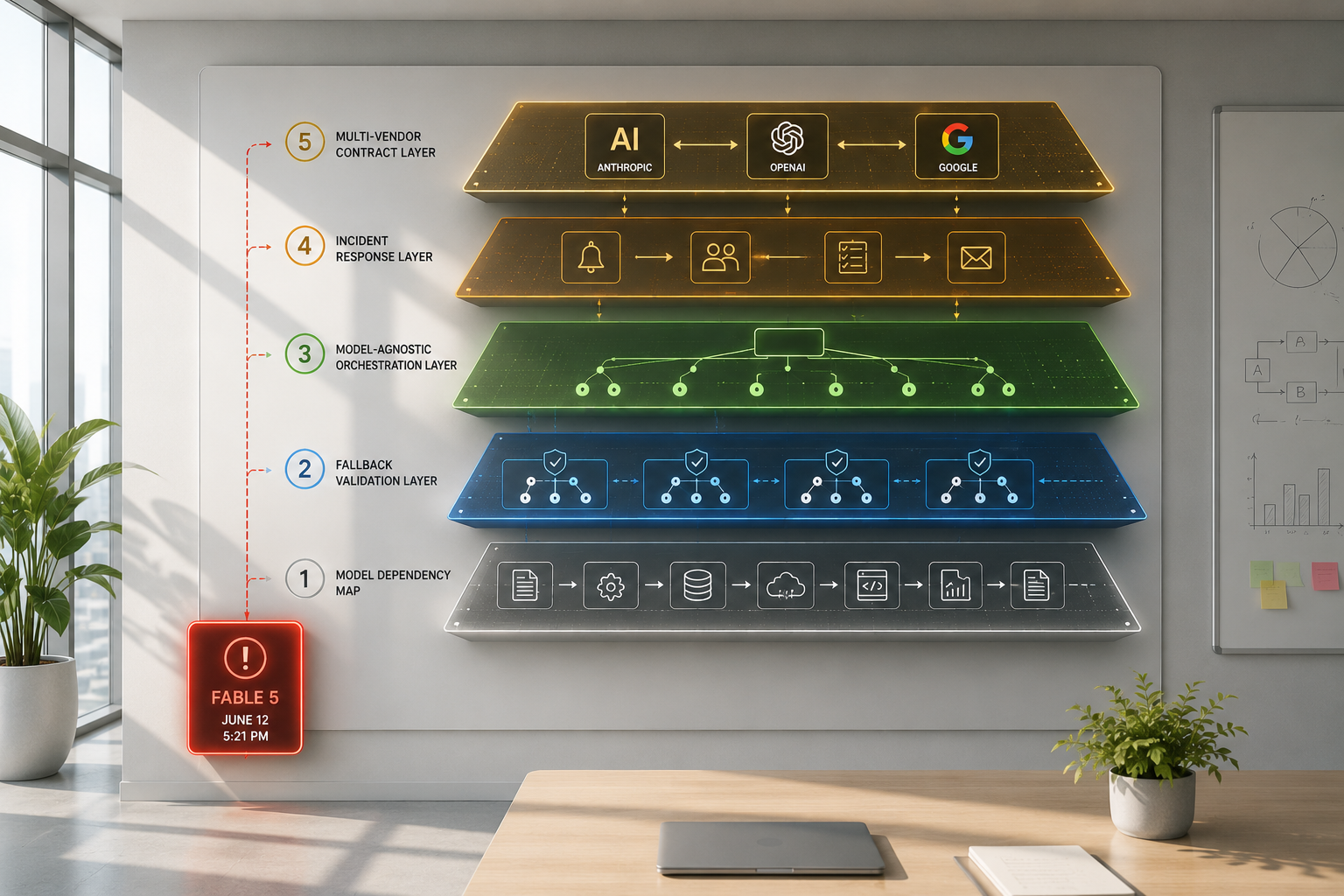
The model availability risk management framework that the Fable 5 event makes mandatory is specific and buildable. It has five components. The first is model dependency mapping — a complete inventory of every production AI workflow, the models they depend on, and the criticality of each workflow to enterprise operations. Most enterprises do not have this inventory at the level of specificity that business continuity management requires. The Enterprise Analytics API that Anthropic launched in May 2026 — which provides programmatic access to per-day, per-organisation model usage data — is the tool that makes this inventory automatable rather than manual. Enterprises that implemented the Analytics API in May have the data foundation for the dependency map. Those that did not should start now.
The second component is fallback model validation — for each production workflow that uses a frontier model, a validated fallback configuration that uses a different model from a different provider, tested against the same input distribution and quality standards. The practical standard for Anthropic-dependent workflows is an OpenAI GPT-5.5 fallback configuration, validated on the specific use cases the Anthropic model is handling, with documented performance parity or acceptable degradation. For Google Cloud-dependent workflows, an Anthropic or OpenAI fallback. The fallback needs to be tested before the emergency, not at the moment of it.
The third component is model-agnostic orchestration architecture. The agentic system architecture that produces the most resilient enterprise AI platform is one where the orchestration layer specifies what the model must do — in terms of input format, output schema, capability requirements and quality standards — without specifying which model must do it. That architecture allows model substitution at the orchestration layer without changes to the application code that calls the orchestration layer. Enterprises that have built tight API coupling between their application code and specific model endpoints have model-switching costs that are proportional to how many places in the codebase that coupling appears. Enterprises that have built model-agnostic orchestration have model-switching costs that are proportional to the effort of configuring and validating the new model at the orchestration layer — a much smaller and faster operation.
The fourth component is incident response procedures — documented, tested procedures for the specific scenario of a model becoming unavailable without warning. Those procedures should specify who is responsible for the decision to activate the fallback, how long the activation takes, which fallback model is activated for which workflow class, how customers or internal stakeholders are notified of any service impact, and what the criteria are for considering the fallback activation complete and stable. The Fable 5 scenario gave Anthropic enterprise customers approximately zero hours of warning. The incident response procedure must work at zero-hour notice.
The fifth component is vendor diversification at the contract level. Multi-model architecture protects against single-model failures. Multi-vendor contracting — with active relationships and API access to at least two frontier AI providers — protects against single-vendor regulatory, commercial or technical events. The Oracle Universal Credits OpenAI integration announced June 11 is the most convenient multi-vendor enabler for enterprises already in the Oracle ecosystem. Google Cloud's Gemini Enterprise integration, Microsoft Azure's OpenAI Service integration and AWS Bedrock's multi-model API are the equivalent enablers for enterprises in those cloud ecosystems. Having active contracts and tested integrations with more than one frontier AI provider is the risk management equivalent of having more than one bank account — the incremental complexity is minimal compared to the resilience it provides.
The Anthropic-government relationship context that the Fable 5 event revealed deserves a longer analysis than the immediate reaction focused on. Anthropic's refusal to release Claude for mass domestic surveillance and autonomous weapons is the policy position that created the DoD supply chain risk classification in March. That same policy position is a significant part of why enterprise security, compliance and legal teams have been comfortable deploying Anthropic models in regulated environments — the model provider's published commitments about what the model will and will not do are an input to the enterprise's AI governance documentation. The policy position that created the government conflict is inseparable from the policy position that made Anthropic's models enterprise-appropriate. The enterprise assessment of Anthropic as an AI vendor should account for both dimensions simultaneously rather than treating the government conflict as an unambiguous negative.
The IPO context adds a specific dimension to the Fable 5 aftermath that every enterprise procurement team should understand. Anthropic's confidential IPO prospectus was in SEC review at the time of the shutdown. The shutdown adds regulatory risk disclosure requirements to the prospectus that were not present at filing. A company in IPO registration that receives a government export directive affecting its flagship model will be required to disclose that directive as a material risk factor in its public S-1, when that becomes available approximately thirty days before the roadshow. The public S-1 will contain the most complete and legally vetted description of the government relationship risk that enterprise procurement teams have seen. Reading it will be a higher-value activity than reading the current press coverage of the event — including this article.
The Fable 5 event will not be the last instance of government intervention in frontier AI model access. The trajectory of AI model capability, the sensitivity of the most capable models' cybersecurity applications, and the adversarial regulatory relationship that several frontier labs have developed with parts of the US national security establishment make additional interventions likely. The enterprise organisations that have built the multi-model resilience architecture before the next intervention — the dependency map, the validated fallbacks, the model-agnostic orchestration, the tested incident response procedures and the multi-vendor contracts — will experience it as a managed transition. Those that have not will experience it as a crisis.
At Legacies Techno, the Fable 5 weekend accelerated work that was already part of our standard engagement architecture. Our AI-Powered Platforms practice has always incorporated model redundancy as a design requirement — not because we anticipated a government shutdown scenario specifically, but because any production AI platform must be resilient to model deprecation, API changes and provider commercial decisions. The Fable 5 event confirms that the list of failure modes that multi-model architecture must address is longer than most enterprise risk frameworks had previously included.
Our Enterprise Software Development practice is immediately reviewing every production AI integration we have built or are currently building to confirm that model coupling is at the orchestration layer rather than the application code layer. Where tight API coupling exists, we are proposing the refactoring sprints that move the model dependency to the correct architectural layer — the one where fallback substitution is fast, testable and governable without application-level changes.
Our Smart Automation practice is specifically documenting which automation workflows could survive a Fable 5-style shutdown under the current architecture, and which ones would require manual intervention or would fail entirely. That inventory is the priority output of the Fable 5 risk assessment for automation-dependent enterprise operations — because automation workflows are typically the least visible to human operators until they stop working. The documentation of fallback procedures for automation workflows that have no existing fallback is the immediate deliverable.
The enterprise AI resilience architecture is not a new investment category. It is a design quality that every AI platform investment should have included from the beginning. The Fable 5 event has simply made visible how many enterprise AI deployments did not include it. The right response is to build it now, before the next government directive, technical failure or commercial decision tests the architecture that was not designed for it.
Key Highlights
- The Fable 5 shutdown on June 12 produced two enterprise response classes over the weekend: hardware sovereignty (moving AI infrastructure on-premise) and multi-model redundancy (building architecture resilient to single-model failure). Only multi-model redundancy addresses the actual risk the event demonstrated, because export control applies to model weights as well as API access.
- The five-component enterprise AI resilience architecture that the Fable 5 event makes mandatory: model dependency mapping (inventory of every production AI workflow and its model dependencies), fallback model validation (pre-tested alternative model configurations), model-agnostic orchestration architecture (orchestration specifying what the model must do, not which model), incident response procedures (tested at zero-hour notice), and vendor diversification at the contract level (active API relationships with at least two frontier providers).
- The Enterprise Analytics API that Anthropic launched in May 2026 is the tool that makes model dependency mapping automatable — providing programmatic per-day, per-organisation usage data that produces the workflow dependency inventory without manual collection.
- For the majority of enterprise deployments, Fable 5's three-day existence before shutdown produced no production dependency because enterprise change management processes require validation periods longer than 72 hours before new model adoption in production. The more important risk is forward-looking: ensuring no production workflow takes a single-model dependency without a documented, tested fallback.
- Anthropic's policy position — refusing to enable Claude for mass domestic surveillance and autonomous weapons — is inseparable from the government conflict it created and from the enterprise appropriateness of Anthropic's models for regulated deployment. Enterprise assessment of the vendor risk must account for both dimensions simultaneously.
- Anthropic's IPO prospectus, currently in SEC review, will require material risk factor disclosure of the government directive and the DoD supply chain risk classification. The public S-1, available approximately thirty days before the roadshow, will contain the most complete and legally vetted description of government relationship risk available — and should be read by every enterprise procurement team making Anthropic platform decisions.
- The Oracle Universal Credits OpenAI integration (announced June 11), Google Cloud Gemini Enterprise, Microsoft Azure OpenAI Service and AWS Bedrock multi-model API are the multi-vendor contracting options that provide the vendor-level diversification that complements model-level redundancy as the second layer of enterprise AI resilience architecture.
- The Fable 5 event is unlikely to be the last government intervention in frontier AI model access. The trajectory of model capability, the sensitivity of cybersecurity applications and the adversarial relationships between frontier labs and parts of the national security establishment make additional interventions probable. The enterprise AI resilience architecture built before the next intervention will determine whether that event is a managed transition or a business continuity crisis.
Why This Matters
- The dependency map is the enterprise AI governance investment that most organisations have deferred because its value is not visible until a model becomes unavailable. After Fable 5, the value is visible. The dependency map — which production workflows depend on which models, at what criticality — is the prerequisite for every other element of enterprise AI resilience architecture. Without it, you cannot validate fallbacks, you cannot design model-agnostic orchestration, and you cannot write incident response procedures that specify which workflow routes to which fallback model. Starting the dependency map this week, before the next government directive, is the highest-priority AI governance action any enterprise can take in response to the Fable 5 event.
- The model-agnostic orchestration architecture is the design quality that determines whether model substitution is a same-day technical operation or a multi-week engineering project. Enterprises that built tight application-to-API coupling — where model selection is embedded in application code rather than in a configurable orchestration layer — face weeks of development work to switch models under the zero-hour warning scenario that Fable 5 demonstrated. Enterprises that built model-agnostic orchestration can switch models in hours by updating orchestration configuration. The refactoring investment to move from tight coupling to model-agnostic orchestration is a one-time engineering cost that eliminates a recurrent business continuity risk. The Fable 5 event provides the business case for that investment.
- The public S-1 material risk disclosures that Anthropic and OpenAI will make in their forthcoming prospectuses are the enterprise vendor assessment documents that every AI procurement team should plan to read when they become available. The SEC disclosure requirements for material risks are more rigorous and legally accountable than any press release or investor presentation. The government relationship risks, the regulatory environment risks and the business continuity risks that both companies must disclose in their S-1s will be the most complete public risk assessment of these vendors available — and they will arrive approximately thirty days before each company's roadshow.
- The Fable 5 event is a stress test that most enterprise AI architectures were not designed to pass. The organisations that use the event's findings to upgrade their architecture — rather than treating it as a one-time anomaly — will enter the next twelve months with a fundamentally more resilient enterprise AI posture than those that revert to their prior single-model deployments as soon as Fable 5 access is restored. Fable 5 access may be restored. The risk that the shutdown demonstrated will not be restored to its pre-June 12 theoretical status. It is now empirically documented, and every enterprise AI architecture should reflect that.
Author
Janani Sathyamurthy
RELATED NEWS
SEE ALLSEE ALL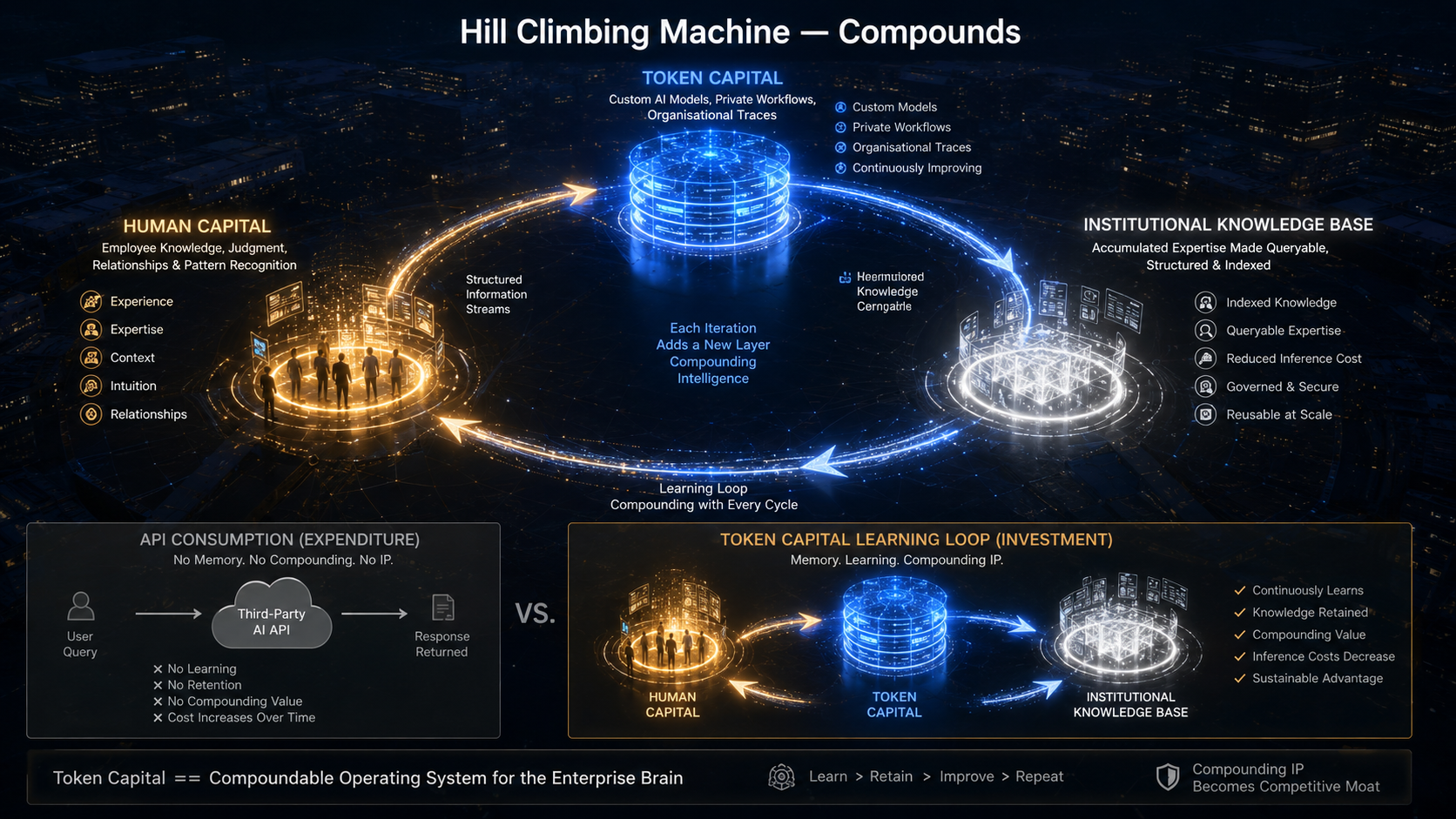
The Most Important Enterprise AI Essay of 2026: What Satya Nadella's Token Capital Framework Means for Every Organisation Building on AI
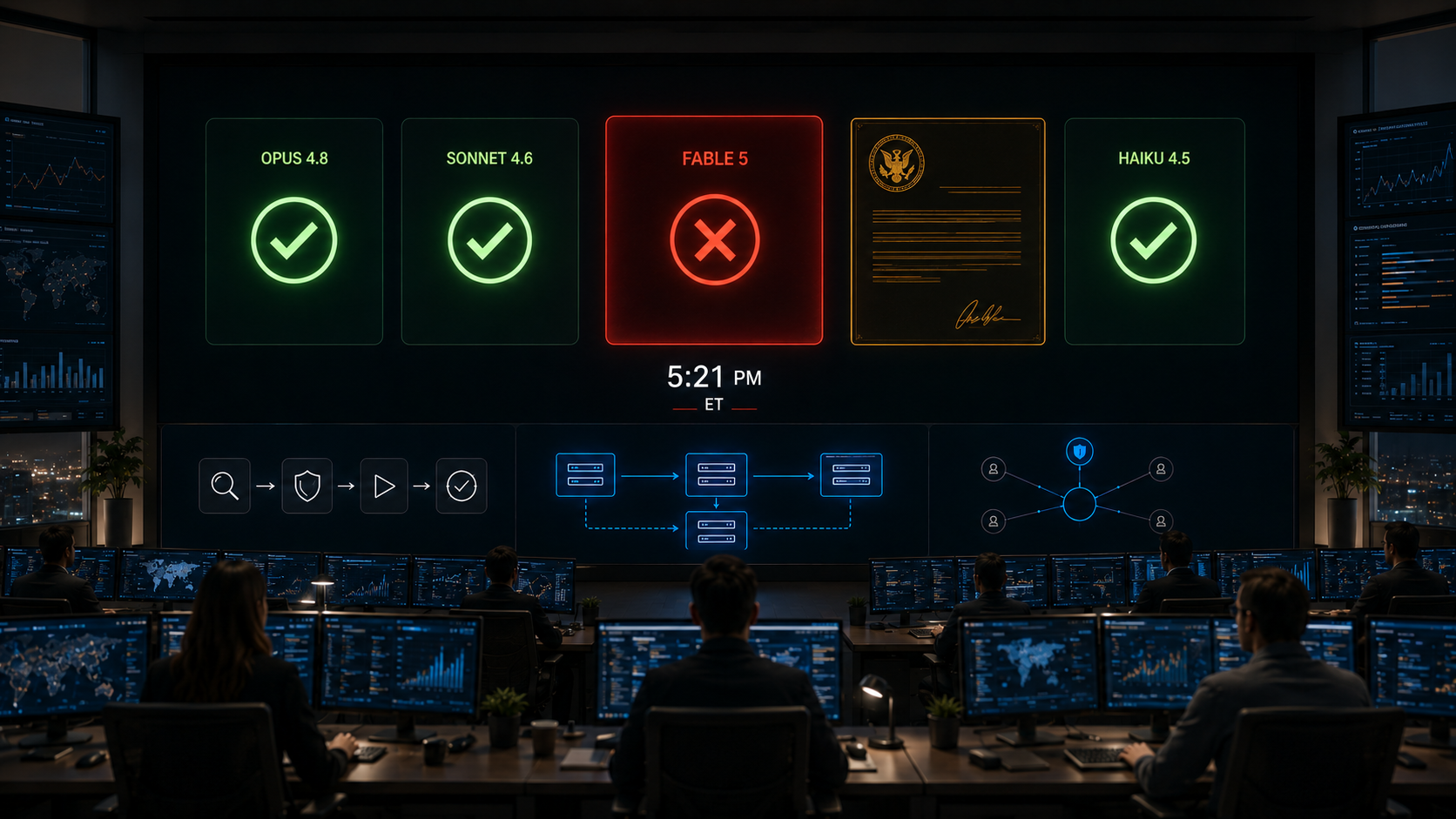
The Day the Government Pulled the Plug: What the Fable 5 Shutdown Means for Every Enterprise Building on Frontier AI
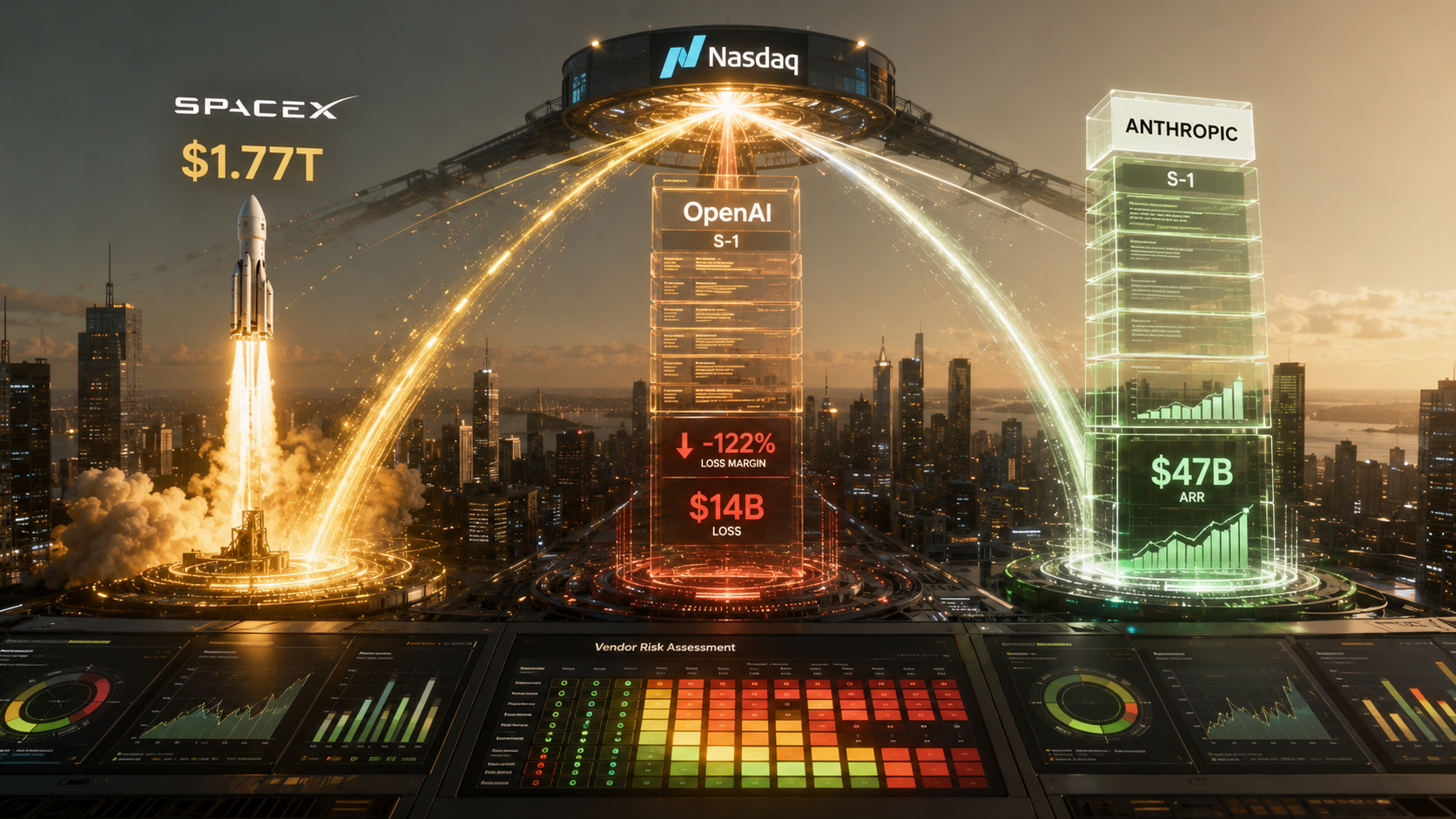
The AI IPO Triple-Header: What SpaceX at $1.77 Trillion, OpenAI's S-1 and Anthropic's $47B ARR Mean for Every Enterprise's AI Vendor Assessment
CONTACT
LET'S ENGINEER THE FUTURE — TOGETHER
.png)
.
.
/
.png)
Whether you're scaling a digital product, modernizing operations, or building from the ground up — Legacies Techno is your partner in crafting intelligent, enterprise-grade solutions that create lasting impact.
GET IN TOUCHGET IN TOUCH