
Apple's Last Act and Its Biggest AI Bet: What WWDC 2026, Siri AI and iOS 27 Mean for Every Enterprise in Apple's Ecosystem
On June 8, 2026, Apple CEO Tim Cook opened WWDC 2026 at Apple Park — his final WWDC as CEO, before handing leadership to John Ternus on September 1. The keynote he delivered was the most consequential in Apple's history for the AI era: a ground-up rebuild of Siri into an AI-native personal assistant powered by the second generation of Apple Foundation Models, iOS 27 and macOS Golden Gate with deep Apple Intelligence integration, Xcode 27 with AI-first development tools, and the confirmation of Apple's partnership with Google as its preferred AI infrastructure provider for the models that power Apple Intelligence. The announcements have immediate enterprise implications — for every organisation deploying in Apple's enterprise ecosystem, managing Apple device fleets, or building applications for iOS and macOS — and several significant limitations that enterprise technology teams must understand before planning their Apple Intelligence adoption timelines.
Date
Jun 9, 2026
Category
Technology
Reading Time
7 minutes
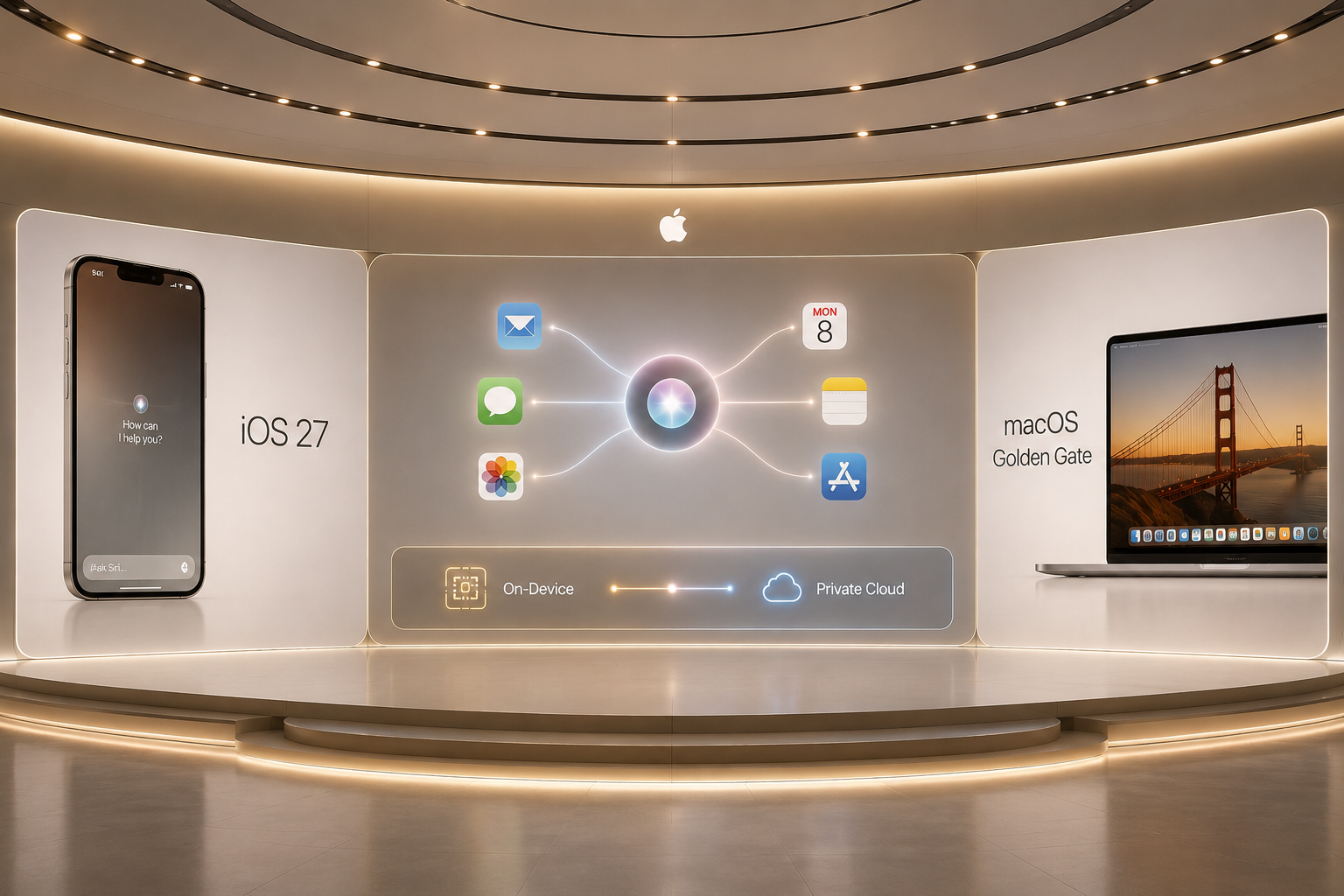
Apple's WWDC 2026 event kicked off on June 8 at Apple Park, starting a week packed with reveals about Siri AI, iOS 27, Apple Intelligence and more. It marks CEO Tim Cook's last WWDC with the company, after announcing he is handing things off to Senior Vice President of Hardware Engineering John Ternus on September 1. The leadership transition context is relevant to enterprise Apple ecosystem decisions for a specific reason: John Ternus's background is hardware engineering, not software services. The strategic priorities of an Apple led by the SVP of Hardware Engineering will likely weight device capability, silicon development and the integration of AI into Apple's physical products more heavily than the services-revenue-oriented priorities that have characterised Cook's tenure. For enterprise mobility and endpoint management teams, the hardware-forward era of Apple may produce AI capabilities more deeply integrated into the device layer — and thus more accessible without cloud dependency — than the software-services model that preceded it.
The biggest announcement at WWDC 2026 was Siri AI, a ground-up rebuild of Apple's long-struggling voice assistant. Powered by the next generation of Apple Intelligence, Siri AI can hold real back-and-forth conversations, pull context from a user's emails, messages and photos, and act across apps in ways the previous Siri never could. In a demo, a user was able to ask Siri for directions to a landmark seen in an Instagram post — Siri retrieved the location from the image, cross-referenced it with the user's calendar and suggested the optimal travel time based on the user's current schedule.
The Apple Foundation Models second generation — which powers the rebuilt Siri and Apple Intelligence — is the infrastructure announcement that gives the WWDC enterprise implications their full scope. Apple announced a second version of its Apple Foundation Models. The model can understand speech, and read text and images. Apple's multi-modal foundation models running on-device — on the Apple silicon in iPhone 16 and later, M1-and-later Macs, and Apple Watch Series 9 and later — represent the privacy-first AI architecture that distinguishes Apple's approach from every cloud-dependent alternative. An Apple Intelligence workflow that processes an employee's emails, calendar and documents on the device, without that data leaving the enterprise's managed endpoints, is a fundamentally different security and compliance posture than the same workflow processed through a cloud API.
Apple said it uses Apple Intelligence, and it will be able to understand personal context and what apps can do. Apple VP Mike Rockwell said in a presentation: "Siri is now a profoundly more capable assistant that helps you find what you need and gets more done. It is also more conversational, so you can go back and forth like never before and get detailed, engaging answers."
The enterprise Xcode 27 announcement is where WWDC 2026 most directly affects every enterprise with iOS and macOS application development responsibilities. Xcode 27 ships with AI-first development tools — building on the foundation that Xcode 16 and 17 established with GitHub Copilot and Claude Code integrations — and introduces the developer APIs required to build applications that natively leverage Siri AI's context awareness and Apple Intelligence capabilities. The enterprise application development implications are immediate: every iOS and macOS enterprise application that wants to offer Siri AI integration — allowing users to invoke enterprise workflows through voice, use Siri to find enterprise content across apps, or leverage Apple Intelligence for enterprise document processing on device — requires Xcode 27 and the new Apple Intelligence developer frameworks.
The limitations embedded in the WWDC 2026 announcements are as important to enterprise planning as the capabilities. Siri AI will launch as an English-only beta later this year. It will not be available in China while Apple navigates regulatory requirements. And in a significant limitation, Siri AI will not be available on iOS or iPadOS in the EU at launch, though Apple says it is working on a path forward.
The EU limitation is the enterprise planning constraint that will most immediately affect multinational organisations. The EU limitation likely stems from ongoing regulatory discussions around the Digital Markets Act, which imposes interoperability requirements on gatekeeper platforms that Apple has been challenging. Apple's Siri AI is built on a tightly integrated first-party model architecture that would require significant redesign to meet DMA interoperability requirements. For enterprises with significant EU-based iPhone and Mac fleets — which represents virtually every multinational corporation operating in European markets — Siri AI's value as an enterprise productivity tool will be limited to non-EU employees at launch. The timeline for EU availability is not confirmed.
The Google partnership confirmation at WWDC is the infrastructure signal that connects Apple's WWDC announcements directly to the enterprise AI platform decisions we have been covering throughout 2026. Apple confirmed at WWDC that Google is its preferred AI infrastructure provider for Apple Intelligence cloud processing — the partnership that Google Cloud CEO Thomas Kurian announced at Google Cloud Next 2026 in April. The specific Gemini models that power Apple Intelligence's cloud-processed requests have not been publicly disclosed, but the relationship's confirmation means that enterprises evaluating Google Cloud's enterprise AI infrastructure are also evaluating the AI model infrastructure that will power the iPhone, Mac and Apple Watch devices their employees use.
The Tim Cook farewell dimension of WWDC 2026 deserves acknowledgement for what it represents beyond the enterprise technology landscape. Cook has led Apple since 2011 — fifteen years that produced the iPhone's global dominance, the M-series silicon that made Apple silicon the most efficient processing architecture in consumer computing, and a services business that generates more revenue than most Fortune 100 companies. The AI era he is handing to Ternus is one where Apple has fallen behind Google, Anthropic and OpenAI in the capability race his company spent a decade avoiding by prioritising privacy and on-device processing. Apple looks to reassert itself with users and developers who have not been impressed with their AI releases within the wildly competitive AI space. Whether Siri AI's rebuild closes that gap will become clear in the months following the fall iOS 27 launch.
At Legacies Techno, WWDC 2026's enterprise implications divide across our three practice areas in specific and actionable ways. Our AI-Powered Platforms practice is evaluating the Apple Intelligence developer frameworks that Xcode 27 introduces for enterprise application integrations. Enterprise applications that can leverage Siri AI's cross-app context awareness — surfacing relevant enterprise content in response to voice or natural language queries, without data leaving the device — represent a privacy-compliant AI workflow architecture that cloud-dependent alternatives cannot match. For regulated enterprises with data residency requirements, on-device Apple Intelligence processing is the architecture that makes AI-assisted workflows possible without the security review overhead that cloud API integrations require.
Our Enterprise Software Development practice is specifically tracking the Xcode 27 AI development tooling for the enterprise iOS and macOS applications our team builds and maintains. The Apple Intelligence developer APIs introduced at WWDC 2026 represent the integration layer that will differentiate enterprise applications in the iOS ecosystem for the next three to five years — the same way that Face ID and Siri shortcuts integration differentiated enterprise applications in the previous generation. Enterprises that begin their Xcode 27 and Apple Intelligence framework evaluation now will ship AI-integrated enterprise applications in Q4 2026 ahead of competitors who wait for broader platform adoption.
Our Smart Automation practice is specifically noting the EU limitation for enterprise automation deployments. Workflows that depend on Siri AI or Apple Intelligence cloud processing for EU-based employees — document summarisation, meeting note generation, cross-app workflow automation — will require alternative AI provider architectures until Apple resolves its EU availability path. Our practice is designing automation workflows for EU enterprise deployments that do not depend on Apple Intelligence availability as a prerequisite, while building the architecture that allows those workflows to optionally leverage Apple Intelligence once EU availability is confirmed.
Tim Cook's last keynote delivered the most consequential Apple AI announcement since the original Siri in 2011. Whether it delivers on its promise will be known in September. The enterprise planning it requires starts now.
Key Highlights
- WWDC 2026 opened June 8 at Apple Park — CEO Tim Cook's final WWDC before handing leadership to SVP of Hardware Engineering John Ternus on September 1. The keynote centred on Siri AI, iOS 27, macOS Golden Gate, Apple Foundation Models second generation and Xcode 27.
- Siri AI is a ground-up rebuild of Apple's voice assistant — natively conversational, able to pull context from the user's emails, messages and photos, and capable of acting across apps. Powered by the second generation of Apple Foundation Models which can understand speech, text and images.
- Apple confirmed Google as its preferred cloud AI infrastructure provider for Apple Intelligence cloud processing — the partnership announced at Google Cloud Next 2026 in April — integrating Gemini model infrastructure into the Apple ecosystem for cloud-processed Apple Intelligence requests.
- Significant launch limitations: Siri AI launches as an English-only beta; not available in China; not available on iOS or iPadOS in the EU at launch (Apple says it is working on a path forward, likely linked to Digital Markets Act compliance). These limitations affect the majority of multinational enterprise fleets at initial rollout.
- Xcode 27 introduces AI-first development tools and the Apple Intelligence developer frameworks required to build applications that natively leverage Siri AI's cross-app context awareness — the integration layer that will differentiate enterprise iOS and macOS applications for the next product cycle.
- Supported devices: iPhone 16 models and later, iPhone 15 Pro and Pro Max, iPad mini (A17 Pro), Mac and iPad models with M1 or later, Apple Watch Series 9 or later and Apple Watch Ultra 2 or later. Legacy Apple enterprise device fleets that have not upgraded to these device tiers will not access Apple Intelligence features.
- Tim Cook's handover to John Ternus on September 1 signals a potential strategic shift toward hardware-forward AI — deeper silicon integration of AI capabilities, potentially increasing on-device AI processing and reducing cloud dependency in future Apple Intelligence generations.
- 1,000 apps are submitted to the Apple App Store every hour, according to Tim Cook's opening remarks — contextualising the scale of the developer ecosystem that Xcode 27 and Apple Intelligence developer APIs will reach through enterprise and consumer application development.
Why This Matters
- Siri AI's on-device processing architecture is the privacy-first enterprise AI capability that cloud-dependent alternatives cannot replicate at Apple's scale. For regulated enterprises with data residency requirements — financial institutions, healthcare organisations, government agencies — Apple Intelligence workflows that process sensitive content on managed devices without cloud data transmission represent a compliance-enabling architecture. The Xcode 27 Apple Intelligence developer APIs are the integration mechanism that makes this architecture accessible to enterprise application development teams.
- The EU limitation is the most immediately consequential constraint for multinational enterprise Apple deployments. Enterprises with significant European employee bases — which includes virtually every large enterprise with EU market operations — will have Siri AI available to their non-EU employees from the iOS 27 fall launch and unavailable to EU employees on an unconfirmed timeline. Enterprise mobility management teams should plan their Apple Intelligence adoption timelines around a split rollout rather than a global one, and avoid enterprise application dependencies on Apple Intelligence availability for EU-based workflows.
- The Google-Apple infrastructure confirmation is the enterprise AI platform signal that every Google Cloud enterprise customer should note. Enterprises that have committed to Google Cloud as their primary AI infrastructure are now choosing infrastructure that also powers Apple Intelligence — the AI features on the devices their employees carry. The strategic alignment between Google's enterprise AI platform and Apple's consumer AI platform creates a cloud-to-device AI experience continuity that no other enterprise cloud provider can replicate in the Apple ecosystem.
- John Ternus's appointment as Apple CEO signals a hardware-forward era that enterprise IT and endpoint management teams should prepare for. A hardware-led Apple is more likely to make aggressive investments in on-device silicon AI capability — the direction the Apple Silicon M-series has been heading — and potentially less focused on the services revenue optimisation that has characterised the Cook era. For enterprise device fleet managers, a hardware-forward Apple means more frequent device capability differentiation tied to silicon generation, making the business case for device refresh cycles more directly tied to AI feature availability.
Author
Sathyamurthy Tiroumourty
RELATED NEWS
SEE ALLSEE ALL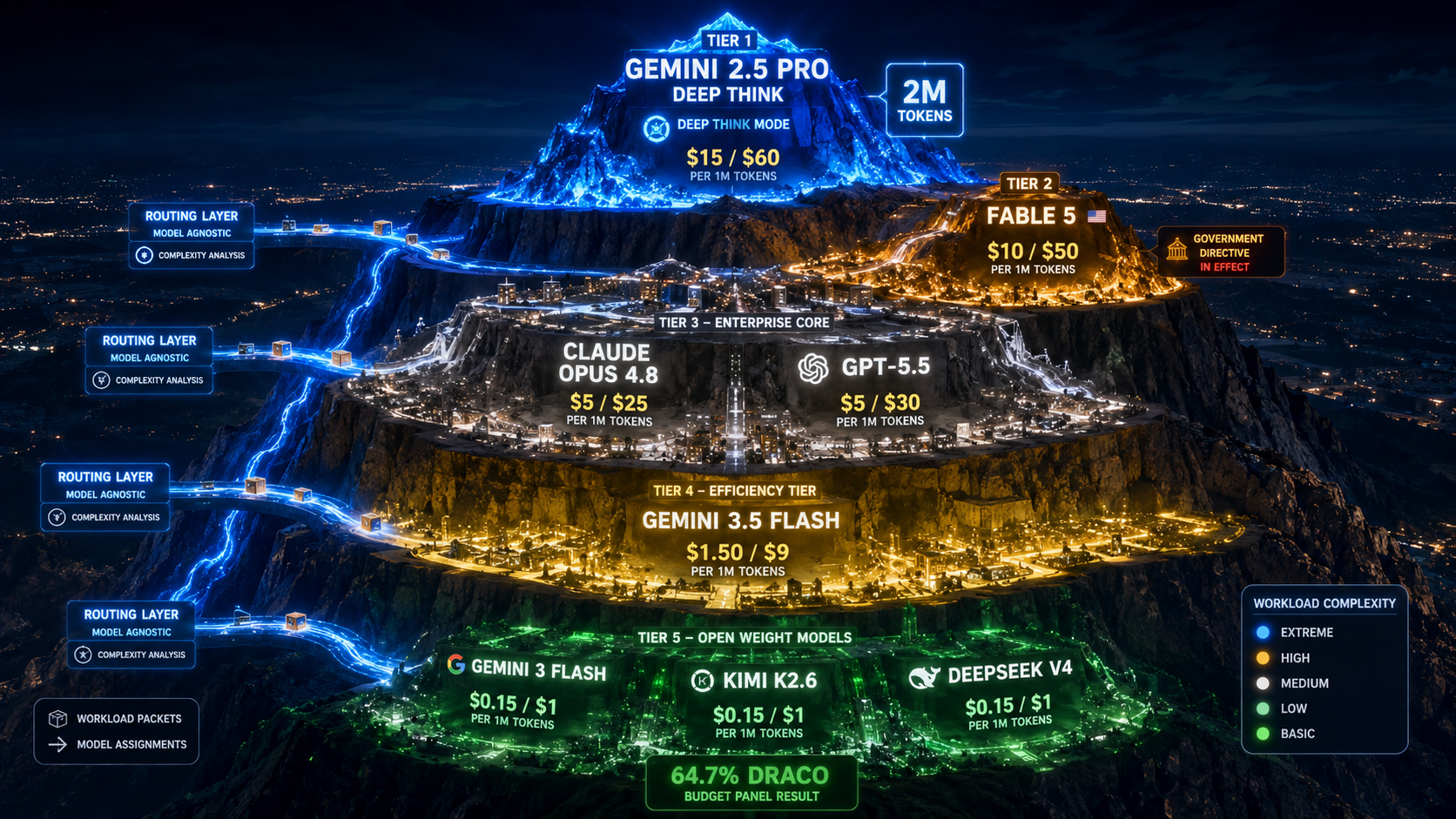
The Frontier Model Market Just Restructured Overnight: What Gemini 2.5 Pro Deep Think, Fable 5's Billing Cliff and the OpenRouter Fusion Data Mean for Every Enterprise AI Architecture
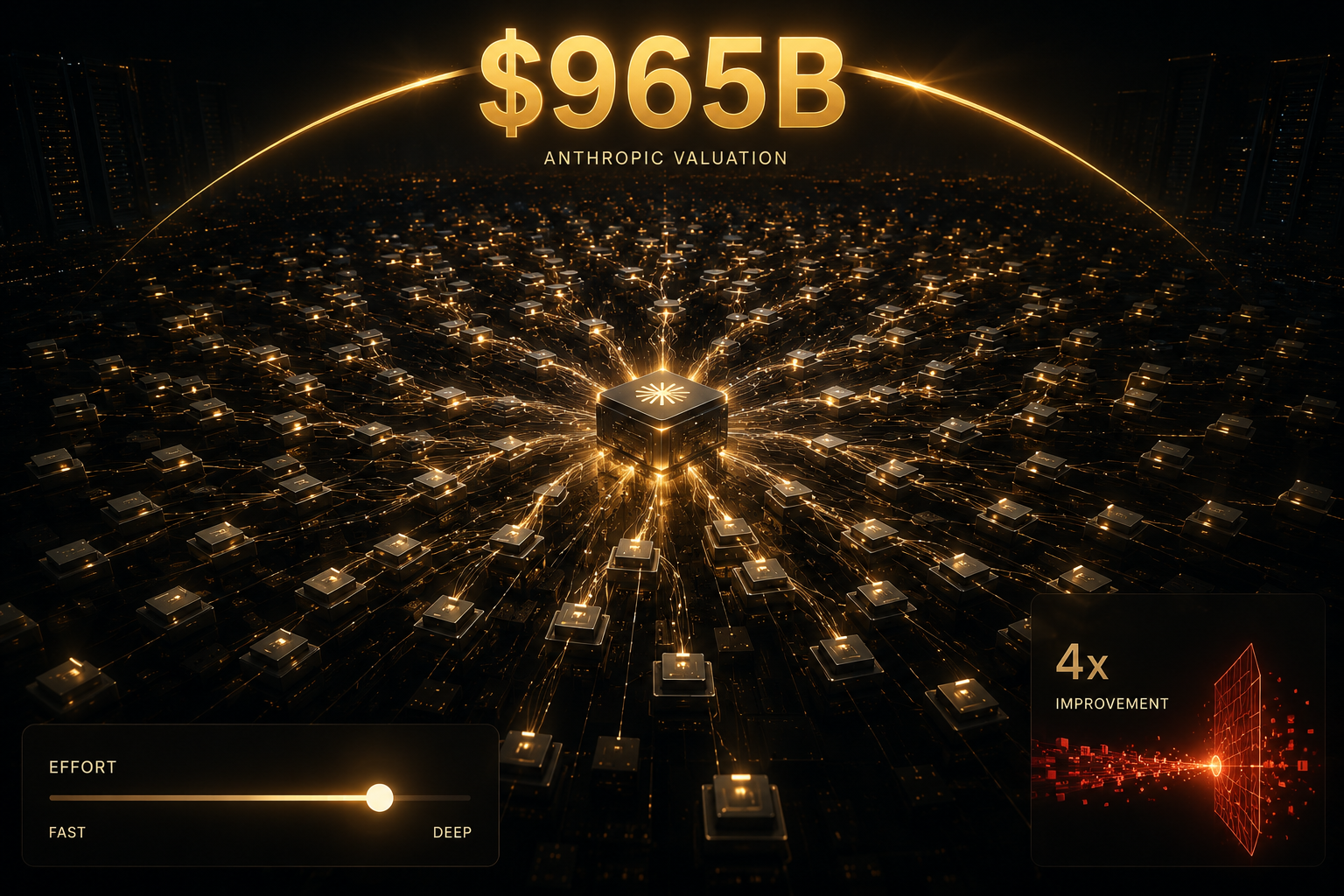
The Most Capable Model Ever Released and a $965 Billion Valuation: What Claude Opus 4.8 and Anthropic's $65B Raise Mean for Every Enterprise Building on AI
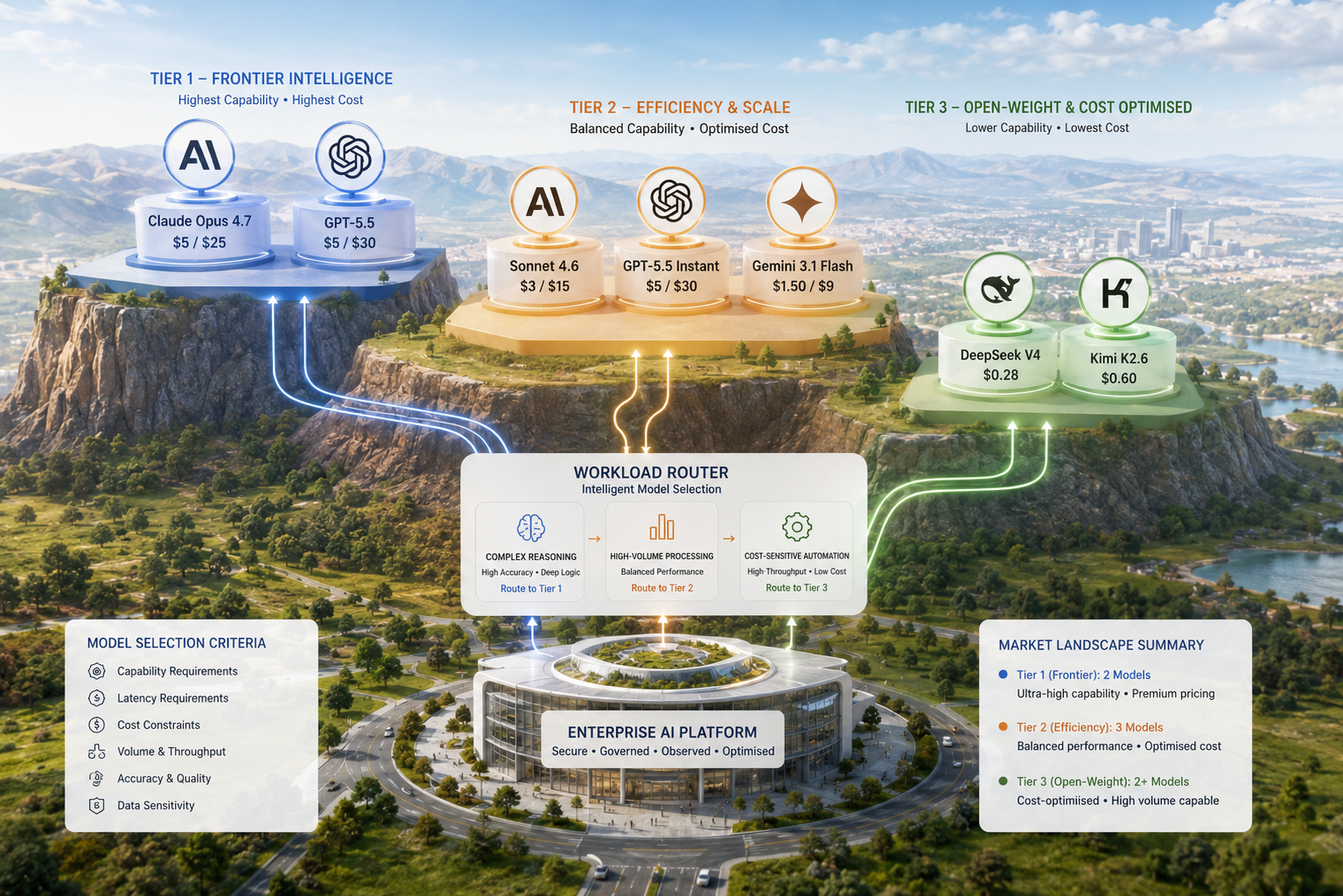
What OpenAI Actually Shipped in May and Where the Frontier Model Market Stands Heading Into June
CONTACT
LET'S ENGINEER THE FUTURE — TOGETHER
.png)
.
.
/
.png)
Whether you're scaling a digital product, modernizing operations, or building from the ground up — Legacies Techno is your partner in crafting intelligent, enterprise-grade solutions that create lasting impact.
GET IN TOUCHGET IN TOUCH